From ‘I’ to ‘We’: Using Appreciative Inquiry as a pedagogical approach in higher education
Bhavani Ramamoorthi, grant researcher, Faculty of Education and Psychology, University of Jyväskylä
bhramamo@jyu.fi
Matti Taajamo, Senior Researcher, Finnish Institute of Educational Research, University of Jyväskylä
matti.taajamo@jyu.fi
Elina Fonsén, Associate Professor, Faculty of Education and Psychology, University of Jyväskylä
elina.k.fonsen@jyu.fi


Abstract
The practical aim of this paper is to offer a new perspective on collective leadership formation among multicultural higher education students using Appreciative Inquiry (ApI) as a pedagogical approach. The study was based on a self-designed intervention (by the first author) called the Collaboratories Lab, which provided a context for acquiring knowledge about collaboration. The study examined the interactions among the participants in the Collaboratories Lab through the theoretical lens of ApI, with its key elements of social relations and generativity. This study contributes to the understanding of how the application of participatory pedagogies, such as ApI, can help enable collective leadership among students while they are engaged in learning. The study used a qualitative case-study approach and deductive thematic analysis. The findings uncovered three distinct forms of collective leadership that emerged through the application of ApI: collaborative synergy, generative dialogue and transformative connections. The study can provide practical applications for enabling the formation of collective leadership within multicultural groups while developing emerging leaders with capacities for navigating an evolving world.
Keywords: Appreciative Inquiry, collective leadership, multicultural students, higher education, participatory pedagogies
Today’s complex, multicultural and global landscape requires leadership that goes beyond individual skills to embrace collective action. Multiple individuals must work together to guide, support and lead organisations through internal challenges and external relationships (Eva et al., 2021; Yammarino et al., 2012). There is an increased emphasis on collective forms of leadership in organisations and workplaces as they include nontraditional teams, virtual working environments and a diverse workforce, creating a need for more fluid and dynamic forms of leadership (Ashford & Sitkin, 2019; DeRue & Ashford, 2010). Higher education institutions, with their increasingly diverse and multicultural student communities, could serve as shared meaning spaces for practising and developing collaborative and collective leadership capacities among emerging leaders (Stark, 2024).
Introduction
Higher education institutions are exploring new ways to contribute to building more resilient societies equipped to navigate current and future crises. As these institutions begin to take responsibility for being socially engaged and extending their influence beyond research and teaching, they must transform societal needs into actionable opportunities for fostering collective capacities among students. Cultivating a shared, desirable future is therefore essential, beginning at the grassroots level with active involvement from student communities within higher education institutions. (Krieglstein & Krolla, 2024). Higher education institutions can enable the building of a practice ground for these collective capacities through creating learning environments that support these shared knowledge building processes and the critical leadership skills needed by society (Dugan & Komives, 2007; Kezar, 2023). In particular, educators hold the key to enabling deeper sensing and relational capacities among higher education students (Partanen, 2023). Participatory and transformative learning approaches can help shape a shared and sustainable future and support the building of collective forms of leadership (Stark, 2024).
Collective leadership development research is a recently emerged form of leadership research that regards leadership not as a property of individuals and their behaviours but as a collective phenomenon. A form of leadership that is shared among multiple people and is potentially fluid and constructed during interaction (Denis et al., 2012). It concerns how leadership is collectively practiced and constructed (Crevani et al., 2010), how it is a collective, collaborative and compassionate practice (Raelin, 2005) and how it is relationally produced through emerging interactions and communication between the actors in a given context (Uhl-Bien, 2006). A large part of the collective leadership literature focuses on the role of context (Sweeney, 2024) and how collective forms of leadership emerge as an outcome of the interaction between the actors in a particular context.
Collective leadership scholarship and application largely centres on competency frameworks and coaching methods that take a person-focused view of collective leadership (Day et al., 2014; Hawkins, 2018). However academic literature has failed to adequately explore other theoretical approaches rooted in organisational development practice that might contribute valuable new understandings of collective leadership (Eva et al., 2021). In the context of an educational setting, this requires not only a theoretical foundation but also methodologies that recognise leadership as a collective phenomenon and actively facilitate the collaborative processes through which such leadership emerges. To accomplish this aim, it helps to rely on the Appreciative Inquiry (ApI) as an approach to understand collective leadership (Sim, 2019).
ApI as a participatory approach has been applied since the 1980s in extensive contexts (Alvarez-Robinson et al., 2024). It has been studied extensively as an organisational development tool that cultivates learning and enable change (Coghlan et al., 2003). Sim (2019, p. 54) argued that by reconceptualising leadership development in the context of ApI, a depiction of leadership as a collective capacity emerges. Hence, ApI as a pedagogical approach could facilitate the development of collective leadership capacities among students engaged in collaborative learning.
This study examined what forms of collective leadership were constructed in the social interactions of a multicultural student group. It was based on the ontological assumption that reality is constructed through and changes within the context of social interactions (Waring, 2012). From this ontological starting point arose the question ‘What collective leadership forms emerge, if any, when Appreciative Inquiry is applied as a pedagogical framework among a multicultural student group in higher education?’ The study characterised the course cohort as multicultural, denoting their varied linguistic and cultural backgrounds (Clayton, 2009)
Theoretical Framework
Appreciative Inquiry
ApI is a popular approach in organisational change and development studies (Cockell et al., 2020; Sim, 2019). It advocates change in the organisation or system through collective inquiry and the building of a shared vision of the future through a generative process allowing for new ideas, new conversations and new possibilities (Bushe, 2013). Hence, ApI’s participatory model enables teams and organisations to build collective leadership capacities (Sim, 2019; Van Velsor et al., 2010).
ApI entails a social constructionist approach, and one of its central ideas is that social reality is malleable and therefore open to endless alteration (Cooperrider & Srivastva, 1987; Sim, 2019). As a theory, ApI is grounded in the understanding that human systems move in the direction of their visions of the future and that the seeds of change are contained in the questions being asked by the individuals in these human systems. ApI influences leadership development through the principles of social constructionism and generative capacity, empowering the members of a group to nurture their ability to design a collectively desired future (Armstrong et al., 2020; Bushe, 2013; Sim, 2019).
To socially construct a reality that allows for newness, emergence and the convergence of varied perspectives, generativity is essential. Generativity occurs when a group of people discovers, creates or is presented with an idea that allows them to experience their work and organisation differently (Bushe, 2013). Generativity allows group members to challenge their existing assumptions, and it creates the ability for them to devise alternatives for future practice (Gergen, 1978). This ability is central to the collective inquiry process in ApI. ApI is a generative process and through its collective visioning and participatory characteristics, facilitates the development of new leadership capacities (Giles et al., 2015; Sim, 2019; Srivastva & Barrett, 1988).
The theory of ApI encompasses three dimensions. First, collaborative strength enables participants to find common ground and exchange ideas while building relational bridges. Second, social elations stem from ApI’s socially constructionist foundation, through which members build shared ideas through cooperative dialogue. Third, generativity refers to the ability to generate and create a shared vision of an emerging future. The relational perspective serves as an underlying concept that is exemplified across all three dimensions (Sim, 2019). Given that the social context of this study was itself a collaborative learning environment, we focused specifically on the dimensions of social relations and generativity to examine the interactions among the students.
Few studies have focused on ApI as a pedagogical approach in the context of higher education (Jones & Masika, 2021; Kung et al., 2013). One recent study explored a similar topic in the context of teachers and their professional development (Abedi & Ametepey, 2024) by focusing on uncovering leadership practices that reinforced self-directed learning. However, a limited amount of research has examined how ApI as a pedagogical approach may facilitate the development of collective leadership capacities among students engaged in collaborative learning. This research can significantly contribute to the existing body of knowledge and address the need for further studies in this area.
Collective Leadership
Since the 2000s, there have been substantial developments in the theorising of leadership as a collective process that is widely distributed across people and contexts (Edwards & Bolden, 2023; Fairhurst et al., 2020; Ospina et al., 2020). Given the increasingly complex demands of work environments and diverse workforces, there is a need for multiple individuals to navigate, support and lead across organisational settings (Yammarino et al., 2012), often by aiming to find common ground between differing views and perspectives (Edwards & Bolden, 2023).
In response to contemporary challenges, different theoretical perspectives have been proposed to conceptualise leadership as a collective process (e.g. Day & Harrison, 2007; Fairhurst et al., 2020; Gronn, 2002a). First, a person-centred collective leadership development approach where the role of individuals and their skills, knowledge coming together for a task has been proposed (Bolden, 2011; Gronn 2002b). Second, the social network perspective seeks to understand and leverage the ties between individuals and teams with an emphasis on interpersonal relationships (Endres & Weibler, 2017; White et al., 2016). In contrast, the third approach is the relational perspective, in which leadership is collective and essentially a relational phenomenon (Raelin, 2018; Uhl-Bien, 2006) and where leadership is an emergent phenomenon.
The definition of collective leadership is tied to diverse linguistic practices through which leadership is constructed and manifested in a collaborative setting (Denis et al., 2012; Fairhurst & Uhl-Bien, 2012). In collective leadership settings, groups reconceptualise leadership from a person-based model to a role-based system in which leadership functions and behaviours are distributed among members according to situational contexts and operational needs (Shuffler et al., 2012; Yammarino et al., 2012).
In this study, leadership was not considered to be situated in an individual. Rather, it was viewed as something fluid, shared among different individuals and constructed during interaction (Crevani et al., 2010; Denis et al., 2012; Fairhurst & Uhl-Bien, 2012; Uhl-Bien & Ospina, 2012). Because leadership was viewed from a socially constructed perspective, contextual elements and the outcomes of the team members’ interactions all played a role in shaping subsequent interactions (Denis et al., 2012).
The collective leadership research faces a key challenge: It is often unclear where leadership actually resides within a group or organisation. Understanding the different forms and arrangements that collective leadership takes can help address this ambiguity. Theoretically, this study views leadership as emerging through students’ interactions and residing in the group rather than being held by one individual. (Edwards & Bolden, 2023). ‘Group’ refers to the multicultural student group that engaged in ApI.
From a methodological point of view, this study settled on a definition of leadership that was not attached to individuals but was rather ‘a social influence process through which emergent coordination (e.g. evolving social order) and change (e.g. new approaches, values, attitudes, behaviours, ideologies) are constructed and produced’ (Uhl-Bien, 2006, p. 654).
Aim of the research and research question
This study aimed to adapt ApI as a theoretical lens to observe and evaluate the collective leadership formation demonstrated by a group of multicultural higher education students through their learning interactions. As a qualitative inquiry, this study explored the following overarching research question: ‘What collective leadership forms emerge, if any, when Appreciative Inquiry is applied as a pedagogical framework within a multicultural student group in higher education?’
Data collection and methodology
This qualitative study relied on a case-study approach (Njie & Asimiran, 2014). As implied by its name, a case study delves into intricate details about the subject or phenomenon being examined—in this instance, the learning interactions among the participants in a collaborative learning environment. The case-study approach has three aspects: the central core from which all activities emerge (i.e. the Collaboratories Lab as a collaborative learning environment), the pivotal role of interaction within the practice process (i.e. the learning interactions among the participants in the Lab) and the interpretation and meaning presented (forms of collective leadership). Interpretation and meaning-making require the gathering of detailed information relative to a group’s process and interactions (Njie & Asimiran, 2014).
Study context and participants
The current study was carried out in a socially constructed collaborative learning environment called the Collaboratories Lab at a higher education institution in Finland. The intervention, designed by the author, involved students working collaboratively towards building knowledge capital. The design of the learning environment involved creating a series of collaborative exercises based on previous scientific research that were intended to facilitate and further the group members’ understanding of collaboration. It included experimental collaborative games, in addition to theatre, storytelling and art (Suzuki et al., 2016; Boje et al., 2015). However, most of the time was spent in an ApI, which is explained in detail later in this section. The teacher of this course and first author of this paper facilitated these collaborative experiences through workshop-based sessions. These sessions included collaborative practices and dialogue sessions among the students that were led by collective inquiry, followed by reflective exercises in an online discussion forum. There was minimal teaching; rather, the teacher engaged more actively as a facilitator of this experiential learning environment. These collaborative exercises were supported by the research literature, guiding instructions from the author’s experience as a teacher- facilitator and textual material when required.
The participants in this study were respondents to an invitation to the Collaboratories Lab course. All participants in the master’s and exchange programmes in the Faculty of Education at University of Jyväskylä, were sent an invitation, and the participants enrolled in the course voluntarily through a university channel where the course information, scope and learning outcomes were published. Prior to the course, participants were informed of the research purpose, their right to anonymity, and their right to withdraw at any time, and signed informed consent forms.
The participants’ areas of degree specialisation included psychology, teacher education, special education and educational leadership. The group comprised eight students from five different countries: India, Taiwan, Japan, Wales and Italy. The students were multicultural in the sense that they all came from distinct cultural and linguistic backgrounds (Clayton, 2009). Five of them were exchange students, and three were pursuing master’s degrees in education. Two were men, and six were women. They were assigned pseudonyms to protect their anonymity (Table 1).
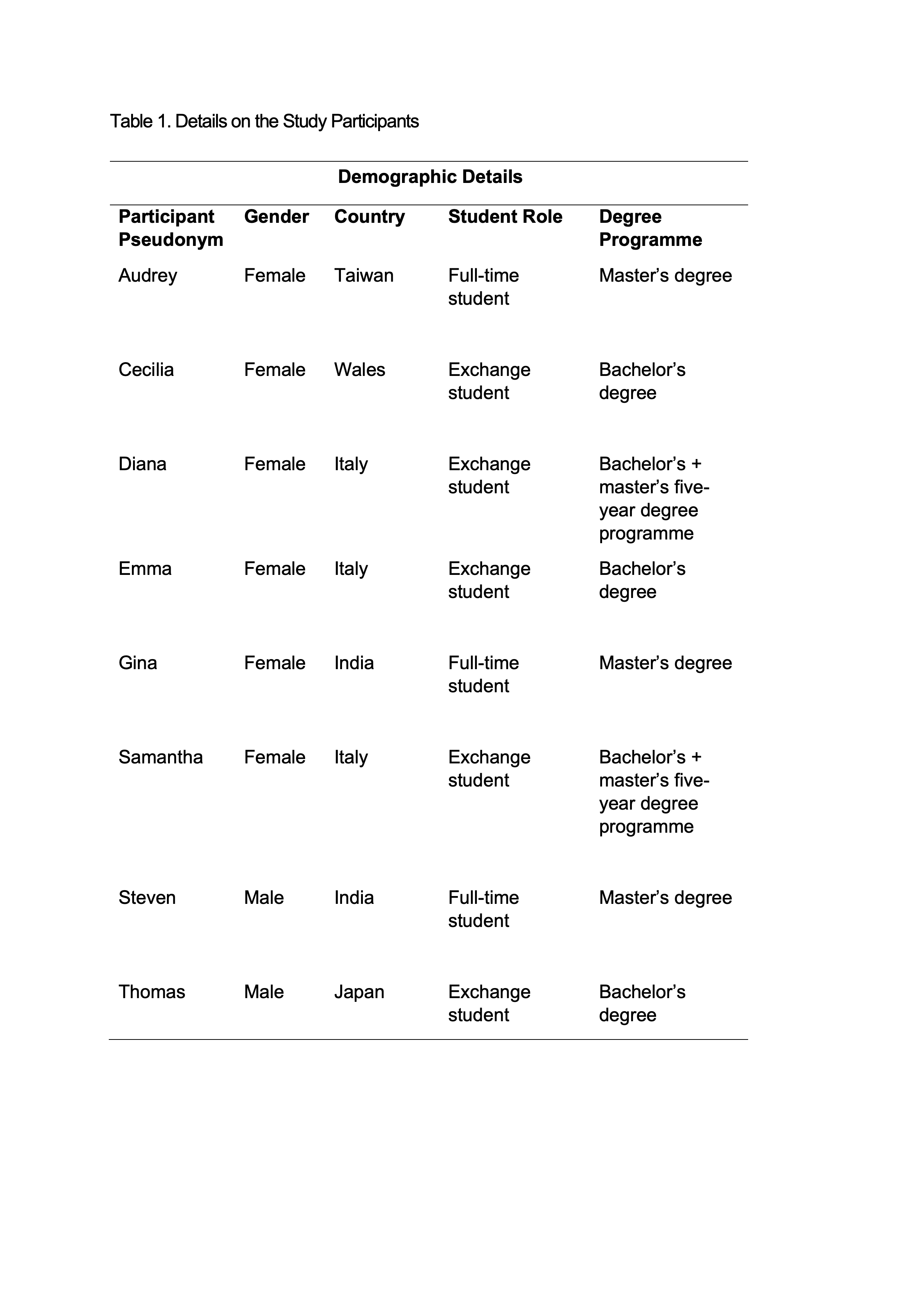
The course was worth 5 ECTS (European Credit Transfer and Accumulation System, requiring approximately 135 hours of work). The students met for 11 in-class contact sessions over three months, with each session lasting two to four hours. In total, there were 30 contact hours, of which 20 were focused on ApI engagement. The students also spent approximately 30 hours in group reflections and online discussions following class interactions. The ApI exercise, which was a major part of their learning engagement, is described below.
Appreciative Inquiry in Practice
In practice, ApI is a participatory process that involves collective inquiry. The students engaged with each other through ApI, which consists of four stages called the ‘4-D cycle of ApI’ (Cooperrider et al., 2003). The first stage of ApI is the discovery stage. The group members discover the strengths and positive experiences they have had in relation to their inquiry (e.g., co-creation in schools). The purpose is to ground the inquiry in lived experiences and shift attention from problems to possibilities.
The second stage is the dream stage; its function is to amplify the positive core of the shared stories and insights from group dialogue by imagining possibilities for the future that were generated during the discovery stage. The purpose is to open up the collective imagination and build a shared sense of the desired future. The third stage is the design stage. It involves the creation of the social architecture, structures and processes needed to support the newly envisioned system of the future. The purpose is to translate the shared vision into concrete propositions and commitments that guide action.
Finally, the fourth stage is the delivery stage, also known as the ‘destiny phase’. Its function is to implement and sustain the changes agreed upon through experimentation and ongoing learning. The purpose is to embed the vision into practice and build a collective capacity to keep inquiring and adapting. All the stages of ApI (Whitney & Gibbs, 2006) were accounted for during the exercise. Table 2 details how ApI was incorporated into the Collaboratories Lab.
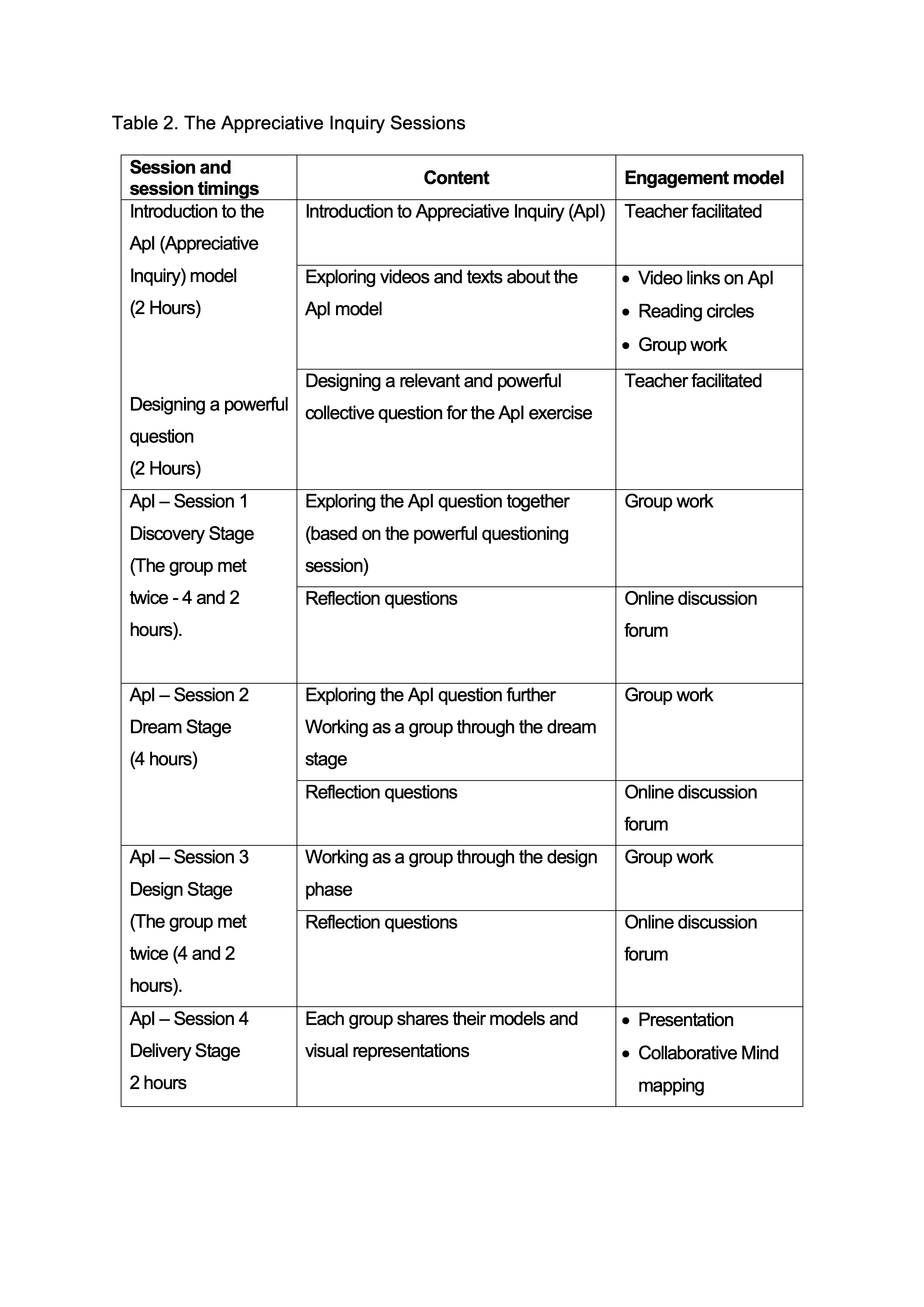
The first session introduced ApI to the students as a participatory approach. Through a teacher-facilitated process, they developed relevant, powerful and collective questions for their ApI. The students spontaneously formed two four-member groups and selected education-focused themes to explore: One group chose co-creation in schools, while the other focused on students building resilience as a life skill. Following each group session, the students engaged in online reflective discussions about their collaboration process. The final session focused on the delivery stage, during which each team presented its action plans to the entire group, thereby demonstrating how they would implement their ApI findings.
Data and Analysis
The data collected for this paper consisted of the students’ individual and group reflections on the discussion forum, recordings and transcriptions from in-person meetings and the students’ final learning assignment, which was to assemble a collaboration toolkit meant to aid their future roles in education. The reflections in the online discussion forum were documented after each ApI session and resulted in a 28-page text. Additionally, the final learning assignments generated a 76-page text. The face-to-face group discussions during the collaborative exercises and ApI sessions were both video and audio recorded and totalled 14 hours and 7 minutes, of which approximately 10 hours and 41 minutes were dedicated to the ApI sessions. Transcriptions of the audio recordings specifically on their experience of working as groups, equal to nine pages of text. The students also created paintings as part of the course, but these visual data were not utilised in this article.
The study employed a qualitative approach and thematic analysis. The aim was to reduce the size of the dataset while extracting understandable segments. This enabled important meanings to be discovered from within the dataset, thereby allowing the gaining of a better understanding of the phenomenon under study (Braun & Clarke, 2006).
The typical phases of thematic analysis are familiarisation with the data, the generation of initial codes, searching for and reviewing themes, defining and naming themes and producing a report (Braun & Clarke, 2006). The process began with a close reading of the whole dataset followed by analysis using ATLAS.ti software. The first author was primarily responsible for the analytical process; however, debriefing sessions were held with the supervisory team to ensure rigor and triangulation (Flick, 2004) in the analysis.
The thematic analysis was deductive and followed a coding frame derived from ApI theory, specifically its two key concepts of social relations and generativity. After becoming familiar with the data, initial codes were generated by marking segments that described characteristics of the students’ participatory engagement. Themes arose from connecting the codes and identifying patterns in the data (Pearse, 2019), and these themes were systematically organised using the ATLAS.ti software. The themes related to the social and relational space included coalition building, mutual empowerment and support, inclusivity, openness to differences and the ways in which the students related to each other individually and as a group when in collaboration. The themes related to generativity included insights for an emerging future, the students envisioning what they collectively were aiming to build, knowledge co-construction, interconnected thinking and broadening their perspectives to allow a shift in their thinking (referred to as framing and reframing).
Using ATLAS.ti, an initial set of slightly more than 30 codes was produced that related to the representations listed above. These codes were structured systematically into subthemes and finally into themes, as shown in Figure 1. The deductive analysis resulted in three main forms of collective leadership. These themes were collaborative synergy, transformative connections and generative dialogue. Data samples and their sources for each of these themes are shown in Appendix 1.
Results
The results of this study (Figure 1) centre on three main forms of collective leadership. The first theme, collaborative synergy (Boyd & Bright, 2007; Cooperrider & Srivastva, 1987) refers to the students’ ability to find common ground. This synergy allowed the group members to collectively visualise a desired future guided by purpose. The students found new ways of organising, negotiating and working towards shared values and ideas. The second theme, transformative connections (Gergen et al., 2004; Stavros et al., 2021) refers to the social fields of relationships and connections among individuals in a group, a radical shared presence that created ground to allow for new meanings to emerge when the students’ manifold perspectives met. The third theme, generative dialogue, refers to the ability to co-create and knowledge-build through collective inquiry. In earlier studies related to ApI, generativity was defined as the creation of new ideas, metaphors and visual representations that change how people think and allow them to implement alternative courses of action or decisions (Bushe, 2013, Cooperrider & Srivastva,1987).
Collaborative synergy
To find common ground and collectively envision and reach shared goals, the members of the student group maintained focus on their future vision, enabled an inclusive space and experimented with empowering dialogue where all voices where included and meaning was co-constructed. This facilitated collaborative synergy among the group members.
In the following quotation, Gina and Samantha, in their reflections in the online discussion forum, refer to a thread of connections among the diverse views that were present.
As we came together as a group in the process of Appreciative Inquiry, it was amazing to witness the similarities in the issues put forward. Even though the contexts we work in are very diverse, there was a thread that connected us all in the discussion. (Gina)
It was also good that during our cooperation work, everyone listened and tried to understand the other components and how all the members of the group tried to be part of the conversation. (Samantha)
By emphasising the experience of authentic collaboration, these quotations highlight the need to be fully involved, present and committed for collaboration to manifest. The participants needed to maintain a deep connection to the present moment and pay close attention to what was emerging from the learning space. One participant, Thomas, remarked on the synergy that can ensue when using the ApI approach with everyone feeling included and engaged in the dialogue. This also meant that leadership somehow felt like a shared endeavour.
[In the case of ApI], everyone can feel the role of the “leader” somewhat, and then [all the members] can really be involved. This feeling of “being involved” can [be a good motivation] for all to participate in and activate the discussion. (Thomas)
The nature of the participatory engagement in ApI helped the group members build collaborative strength through introspection while building connections through dialogue. The inquiry process invited voices into the space while creating an inclusive and empowering environment. The following quote from Audrey highlights the ability to build the fluid capacity to lead while being in collective inquiry—which is an essential skill of co-creating an inclusive environment—while Cecilia’s reflection emphasises the need to stay committed to supporting one another and creating an environment of inclusivity.
In the beginning, I took more initiative to lead. When people got more comfortable, they started to lead more. (Audrey)
I realized that Appreciative Inquiry creates a process of collaboration that allows individuals to feel comfortable and confident to share information, as all members in the group respect and reflect on comments without judgment. (Cecilia)
Thomas articulated how ApI can enable the achievement of a shared purpose by fostering the ability to weave ideas to find a space of shared understanding. Samantha described how she experienced collaboration and complemented Thomas’s quote on the ability to arrive at a shared understanding. ApI created the conditions for relational practices that fostered shared understanding by weaving individual perspectives into a collective sense of direction.
All in all, what is in common between ‘collaboration’ and ‘Appreciative Inquiry’ is that [we can collect all our thoughts] and connect them to reach a higher consensus, which leads us to more positive and sophisticated achievement. (Thomas)
Thanks to the work done [based on this] method, I was able to directly experience how [we effectively collaborated] and [how true collaboration] is understood as an activity in which . . . you must listen and above all find a meeting point that is common and understandable to all. (Samantha)
Collaborative synergy refers to the group members’ ability to find common ground; it also involves a keen sense of commitment to the purpose, to being involved and to maintaining full presence. The collaborative strength of the group members was sustained by the fluidity of the role of leading the dialogue, the active building of connections through dialogue and co-creating an environment of mutual respect and non-judgment while maintaining inclusivity.
Transformative connections
A multicultural student group engaging in collaborative learning interactions might be expected to face barriers due to its diversity. Despite these barriers, the Collaboratories Lab students established transformative connections, co-creating a shared presence where diverse perspectives converged to create new meaning. Gina reflected in the online discussion forum on how diversity worked as both an enabler and a constraint in the final stage of ApI. She described how the presence of diversity pushed the students towards a broader spectrum of thinking.
It [diversity] enabled us to widen our horizons of thinking and get exposure, but at the same time, we tried hard to find a common context to move forward. (Gina)
Diversity strengthened the way the students engaged in collaborative learning. Their relational capacities were further enabled by their simultaneous engagement in collective inquiry. The students learned to be comfortable with discomfort and to embody a sense of acceptance and authenticity while connecting to the collective intention of moving towards a shared goal. Thomas highlighted how the fluidity of the group members´ roles and the ease of their role reversals created a heightened space of relational awareness. Emma shared how it was essential to feel connected as a group and experience transformation both at an individual and a collective level.
I experienced moments when I was being led, but I also felt some moments when I was leading the group. (Thomas)
The question of creating a bond—I believe that it is fundamental in group work, so as to make it not only a job to which we must find a solution but as a moment of growth and personal reflection. (Emma)
Diana’s quote below illustrates how the presence of diversity simultaneously challenged and enriched the dialogical process. Building shared understanding and arriving at shared goals requires engaging with diverse ideas and perspectives—a practice and collective capacity that creates transformational space for group dialogue.
The group also allowed me to be filled with different inputs and perspectives given by our varied backgrounds that could have been a risk but resulted in a great richness for the project. (Diana)
Cecilia credited the outcome of the ApI exercise to the diversity of perspectives and people in the group. The transformative process was enabled by a dialogical relationship that allowed the students to explore diverse ways of knowing and being. The participants found the process to be meaningful because it facilitated substantive conversations.
The emergence of ideas and thoughts created by a mixture of backgrounds and experiences enabled an opportunity to co-create something much more powerful and effective than a group of people sharing similar beliefs or background knowledge. (Cecilia)
The inquiry nurtured radical connections, challenging them to reimagine how they relate to each other supported by a widening horizon of thinking that was enabled by the presence of diversity. The presence of diversity challenged members by bringing varied experiences and perspectives into dialogue, leading them to create a socio-relational space directed towards a collectively desired goal.
Generative dialogue
Generative dialogue refers to the ability to generate co-creation and knowledge-building through collective inquiry. The participatory engagement among the students aimed to build knowledge about collaboration in this study context. The conversations flowed beyond the interpersonal and entered a phase of shared meaning-making and discovery—a phase that held transformative potential. Samantha and Audrey both affirmed that they witnessed this phenomenon through ApI.
Finally, the co-construction of knowledge appeared with the work of Appreciative Inquiry. (Samantha)
This would be a great example of knowledge building, especially the part where we drew our mind maps and extended more ideas on the map to organise them. (Audrey)
Steven’s quote below highlights the idea of developing a collective emotion—a feeling of working together—and how this connects to the concept of leadership while being part of a collective, generative inquiry.
To me, a group becomes a team when it begins to develop collective emotion along with a collective idea. And leadership is the ability to foster collective emotion with respect to an idea. From this perspective, multiple leaders exist in a system and share leadership among each other. (Steven)
In her reflection, Gina described how the group explored the difference between collaboration and co-creation. ApI built the essential skill of generative listening (i.e. listening to co-create a future), which is an often understated leadership skill.
Apart from the content of our discussion, the Appreciative Inquiry process has taught us an important life skill of being engaged and respectful of each other’s opinions and working towards a common goal. The process of our group finding the difference between collaboration and co-creation made me realise the potential of collective inquiry. (Gina)
Cecilia emphasised this idea further when she described how she had exercised a new way of thinking enabled by collective inquiry.
The purpose and process of ‘Appreciative Inquiry’ introduced a new way of thinking that encouraged active participation and inquiry by all individuals involved [in] the whole process. (Cecilia)
This new way of thinking is the relational skill of framing and reframing, whereby people change their perspectives to create and allow for new meanings to be formed. New imagery can also liberate how collective aspirations evolve and make available courses of action that were not previously available before a group begins the process of engaging in collective inquiry. Diana added her view on this relational skill in her reflection.
It was interesting because, besides the difficulties, we were always kindly allowing [ourselves] to find [our own solutions with time]. (Diana)
In the Collaboratories Lab, the design of ApI as a collective inquiry generated the ability to weave ideas together, thereby strengthening the learning relationships. The transformational potential of ApI and generativity was enabled through positive imagery, which led to the emergence of heightened collective creativity and the courage to take innovative action. In the following quote, Cecilia expressed that her ability to stay open to differences created an opportunity for new ways of thinking.
I realised that my curiosity and interest in learning from other people with completely different [backgrounds] and experiences over-powered the stereotypical thoughts and ideas which I assumed would create difficulties. (Cecilia)
In this study, generative dialogue led to the ability to co-create a shared goal and the co-construction of knowledge. This dialogue was enabled through relational skills, such as generative listening and the framing and reframing of perspective, which allowed for cognitive shifts. Envisioning ideas as a collective and working towards shared goals through these shared practices enabled web-like thinking and interdependencies that were enriching for both learning and knowledge-building.
Discussion
This study aimed to examine what kind of collective leadership formation emerges when ApI is applied as a pedagogical approach within a multicultural student group that is engaged in a collaborative and socially constructed learning environment. The learning interactions among the students were examined through the theoretical lens of ApI, which has the attributes of social relations and generativity and is founded on the principles of social constructionism (Bushe, 2013).
The thematic analysis, which was conducted deductively, uncovered that as the student group members worked towards their shared learning goals, they demonstrated three collective leadership forms, namely collaborative synergy, transformative connections and generative dialogue. Figure 1 illustrates three collective leadership forms that emerged from the relational processes and social coalitions inherent in ApI.
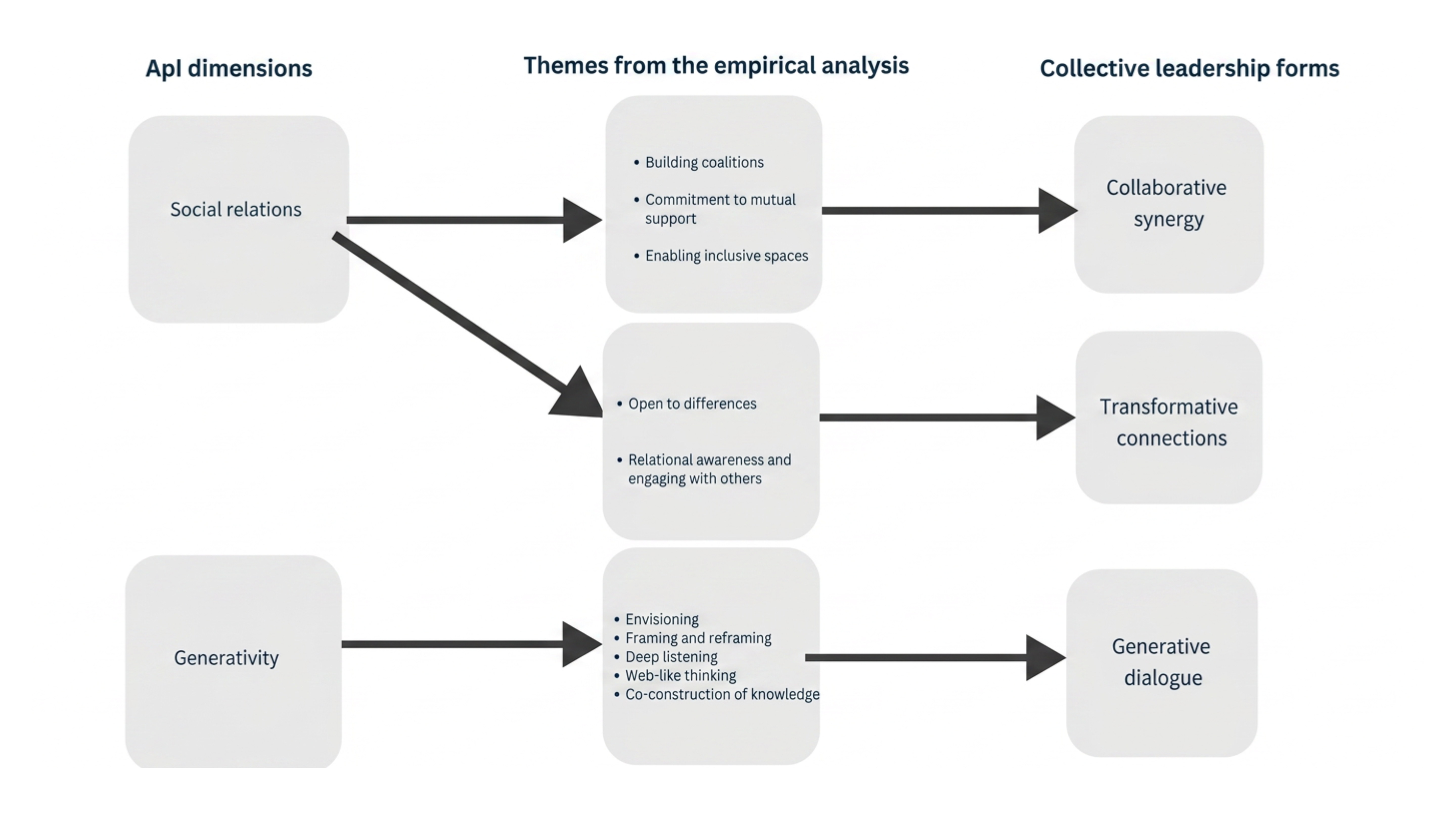
Figure 1. Forms of Collective Leadership: Collaborative Synergy, Transformative Connections and Generative Dialogue
The emergence of these forms of collective leadership was enabled by ApI as a participatory pedagogy in this study. The study showed how the students achieved their shared goal of co-constructing knowledge about collaboration through practicing ApI. Through ApI, they engaged as a diverse group, embracing pluralistic points of view and finding new perspectives. When the students were given an opportunity to participate in conversations about creating a shared future together, they found ways to navigate their diverse perspectives and find convergence collectively while establishing authentic ways of communicating with each other. This is in alignment with the fact that social changes occur when a group of diverse people participates in conversations about a shared future (Whitney & Gibbs, 2006). An intentional, conscious and research-oriented move towards including dialogue-based inquiry and participatory pedagogies in higher education learning environments could help institutions equip students with much-needed skills for the future.
The findings of this study indicated that applying ApI as a pedagogical tool in higher education learning environments has several significant implications for participatory pedagogies. ApI as a participatory pedagogy forms the scaffolding for collective leadership to emerge. First, the course design incorporated ApI, and second, the instructor’s role in delivering the course was crucial. In delivering a course that is based on participatory pedagogies, the role of the instructor is not one of teaching but rather of creating the container for a democratic learning process. To apply such participatory pedagogies in higher education, instructors must have training in facilitation and mediation (Assudani & Kilbourne, 2015).
Participatory pedagogies, such as ApI, help in the development of courses that are based on building knowledge through dialogue-based collective inquiry and reflective inquiry. These pedagogies require a learning design that includes collaboration and socially constructed learning interactions and evolves with student involvement, which was the context of the Collaboratories Lab. Building collective capacities among students requires universities to adopt participatory approaches to enhance teaching and learning by applying active learning techniques, evidence-based practices and dynamic collective learning (Barcelona et al., 2023; Chinoperekweyi, 2023). With an increasingly diverse student population in educational spaces and workspaces, there is a growing need for students to learn the skills necessary to work together towards a collectively desired future. ApI serves as a pedagogical scaffolding that can support this much-needed process in higher education.
The students who participated in this study were not in any particular leadership positions, which enabled the researcher to examine the collective leadership forms that were enabled when ApI was applied as a pedagogical approach. The students practised collective and participatory forms of leadership, which allowed for the full participation of the group members. This practice was enabled once the group members had established a space of shared leadership and felt empowered to create what they needed to move forward collectively as one interconnected group (Orr & Cleveland-Innes, 2015). The students had to construct new forms of social order by framing and reframing their cognitive space, using web-like thinking and envisioning ideas they collectively desired. This was supported by ApI’s core tenet of using generative questions to reconfigure worldviews and integrate wide-ranging perspectives to create shared meanings (Woods & Lythberg, 2024). ApI enabled the students to organise themselves in new ways and identify possibilities for collective forms of leadership. These collective forms of leadership are open to change and reconstruction as they evolve (Uhl-Bien, 2006).
Research on ApI and collective leadership (Sim, 2019) indicates that further investigation is needed into how collaboration and generativity interconnect and give rise to leadership and how to create processes that amplify these dimensions. This study contributes to a further understanding of this intersectional space specifically by revealing how the collective leadership forms of collaborative synergy, generative dialogue and transformative connections are supported by applying ApI as a pedagogical approach in a collaborative learning environment. Doing so can foster groups that lead their own learning and assume responsibility for establishing their own goals, monitoring their progress and making decisions. For a group to operate effectively, individual group members must assume leadership roles and functions, with the motivation of individual members serving as the seed from which shared or collective leadership can develop in a learning context such as the Collaboratories Lab (Denis et al., 2012).
The connection between learning and leadership is a key area of research in higher education, and it allows us to conceptualise leadership in creative ways (Maldonado Franzen & Benavides, 2023; Kezar, 2006). Human connections are integral to building collective leadership and effecting change. ApI and a renewed strengths-based approach to inquiry involve human connections undergoing some kind of transformation, whether it is for an individual, group, organisation or society (Cockell et al., 2020). Teaching students to engage in complex dialogue through the strengths-based approach of ApI can serve as a mechanism to actively strengthen students’ capacity for navigating challenging conversations and transformative forms of leadership (Maldonado Franzen & Benavides, 2023). In exercising collective leadership, a team works towards a common vision, creates inclusive spaces and encourages empowering dialogue (Komives et al., 2013) that support collective forms of leadership with heightened relational sensibilities (Giles et al., 2015). The three collective leadership forms uncovered in this study are interwoven; each energises the other.
Limitations of the study
This study has some limitations. First, it was conducted with a small group of students. The results might be different in larger teams or groups that include students or participants from a broader demographic spectrum. Second, the Collaboratories Lab utilised collaborative pedagogies, such as ApI, as a learning design; using other inquiry-based tools may yield different results. Higher education teachers and researchers seeking to follow up on the results of this study need to learn to use these participatory pedagogical tools and be familiar with applying them to their own study contexts.
Third, the theories applied in this study were chosen specifically from within the scope of ApI; applying other leadership-oriented theories may lead to different results. Data collection techniques and the length of time spent on student engagement may also be critical to the validity of the study’s findings. The study data were derived from the students’ individual reflections on collaboration and their experiences of being together in the ApI exercise, but these data might have also been influenced by the other collaborative experiences that the lab offered.
Conclusion
In sum, there is a great need to build teams that address complex global and local challenges and generate creative solutions collectively. ApI’s grounding in social constructionism and its inherent dimensions of social relations and generativity can be expanded to how teams, communities and societies construct shared visions for the future and enter collaborative action through relational processes that make collective action possible. Hence, creating a social capital for collective capacities that could lead to social cohesion and hence collective desired futures in different contexts.
To build collective leadership capacities, emerging leaders and change agents need democratic spaces of experimentation and learning. Alternative pedagogies that are inquiry based and dialogical can enable collective leadership and relational skills among students. This could be an integral part of educational leadership programmes. University pedagogy training and university teachers’ pedagogical toolkits might be improved by involving more creative, collaborative, dialogical and participatory tools. In this way, higher education institutions can nourish both leadership and learning in classroom spaces and create future change agents who will contribute to more inclusive and solution-oriented workspaces. As regards future research, increasing the understanding of the collective leadership formation of diverse teams using varied collaborative pedagogical tools may yield new and interesting insights into relational practices that support collective forms of leadership.
Declaration of Interest
The author declares no potential conflicts of interest relative to the research, authorship or publication of this case study.
Acknowledgments
The author wishes to thank all of the participants in the study and the Faculty of Education and Psychology at the University of Jyväskylä for technical support. The author also wishes to thank Professor Emerita Aini-Kristiina Jäppinen for her support and invaluable feedback.
References
Abedi, E. A., & Ametepey, A. K. (2025). Leadership practices and support structures enabling teachers’ informal learning for educational technology use: An appreciative inquiry approach. Professional Development in Education, 51(7), 1361‒1375.
https://doi.org/10.1080/19415257.2024.2330973
Alvarez-Robinson, S. M., Arms, C., & Daniels, A. E. (2024). The social, emotional and professional impact of using appreciative inquiry for strategic planning. Journal of Higher Education Policy and Management, 46(5), 484–506. https://doi.org/10.1080/1360080X.2024.2306570
Armstrong, A. J., Holmes, C. M., & Henning, D. (2020). A changing world, again. How Appreciative Inquiry can guide our growth. Social Sciences & Humanities Open, 2(1), 100038.
https://doi.org/10.1016/j.ssaho.2020.100038
Ashford, S. J., & Sitkin, S. B. (2019). From problems to progress: A dialogue on prevailing issues in leadership research. The Leadership Quarterly, 30(4), 454‒460.
https://doi.org/10.1016/j.leaqua.2019.01.003
Assudani, R., & Kilbourne, L. (2015). Enabling entrepreneurial minds: Using appreciative inquiry as a pedagogical tool for uncovering self-awareness and for generating constructivist learning. Journal of Entrepreneurship Education, 18(1), 65–74.
Barcelona, A., Caminong, J., & Cruz, S. R. B. D. (2023). Reimagining the future of a business education program using appreciative inquiry. International Journal of Evaluation and Research in Education (IJERE), 12(4), 1745–1754.
https://doi.org/10.11591/ijere.v12i4.25192
Braun, V., & Clarke, V. (2006). Using thematic analysis in psychology. Qualitative Research in Psychology, 3(2), 77–101.
https://doi.org/10.1191/1478088706qp063oa
Boje, D. M., Rosile, G. A., Saylors, J., & Saylors, R. (2015). Using storytelling theatrics for leadership training. Advances in Developing Human Resources, 17(3), 348–362.
https://doi.org/10.1177/1523422315587899
Bolden, R. (2011). Distributed leadership in organizations: A review of theory and research. International Journal of Management Reviews, 13(3), 251–269.
https://doi.org/10.1111/j.1468-2370.2011.00306.x
Boyd, N. M., & Bright, D. S. (2007). Appreciative inquiry as a mode of action research for community psychology. Journal of Community Psychology, 35(8), 1019–1036.
https://doi.org/10.1002/jcop.20208
Bushe, G. R. (2013). Generative process, generative outcome: The transformational potential of appreciative inquiry. InD. L. Cooperrider, D. P. Zandee, L. N. Godwin, M. Avital & B. Boland (Eds.), Organizational generativity: The Appreciative Inquiry Summit and a scholarship of transformation (Vol. 4., pp. 89–113). Emerald.
https://doi.org/10.1108/S1475-9152(2013)0000004003
Chinoperekweyi, J. (2023). Engaged scholarship: Maximizing student learning through action research and appreciative inquiry. Organization Leadership and Development Quarterly (OLDQ), 5(1), 7–22.
https://ssrn.com/abstract=4316095
Clayton, J. (2009). Multiculturalism. In R. Kitchin & N. Thrift (Eds.), International encyclopedia of human geography (pp. 211–215). Elsevier.
https://doi.org/10.1016/B978-008044910-4.00978-0
Cockell, J., & McArthur-Blair, J. (2020). Appreciative Inquiry in higher education: A transformative force (2nd ed.). FriesenPress.
Coghlan, A. T., Preskill, H., & Catsambas, T. T. (2003). An overview of appreciative inquiry in evaluation. New Directions for Evaluation, 100, 5–22.
https://doi.org/10.1002/ev.96
Cooperrider, D. L. & Srivastva, S. (1987). Appreciative inquiry in organizational life. In R. Woodman & W. Pasmore (Eds.), Research in organization change and development (Vol I., pp.129–169). JAI Press.
Cooperrider, D. L., Whitney, D., & Stavros, J. M. (2003). Appreciative inquiry handbook. The first in a series of AI workbooks for leaders of change (Vol. 1). Berrett-Koehler.
Crevani, L., Lindgren, M., & Packendorff, J. (2010). Leadership, not leaders: On the study of leadership as practices and interactions. Scandinavian Journal of Management, 26(1), 77–86.
https://doi.org/10.1016/j.scaman.2009.12.003
Day, D. V., & Harrison, M. M. (2007). A multilevel, identity-based approach to leadership development. Human Resource Management Review, 17(4), 360–373.
https://doi.org/10.1016/j.hrmr.2007.08.007
Day, D. V., Fleenor, J. W., Atwater, L. E., Sturm, R. E., & McKee, R. A. (2014). Advances in leader and leadership development: A review of 25 years of research and theory. The Leadership Quarterly, 25(1), 63‒82. https://doi.org/10.1016/j.leaqua.2013.11.004
Denis, J. L., Langley, A., & Sergi, V. (2012). Leadership in the plural. Academy of Management Annals, 6(1), 211–283.
https://doi.org/10.1080/19416520.2012.667612
DeRue, D. S., & Ashford, S. J. (2010). Who will lead and who will follow? A social process of leadership identity construction in organizations. Academy of Management Review, 35(4), 627–647.
https://doi.org/10.5465/amr.35.4.zok627
Dugan, J. P., & Komives, S. R. (2007). Developing leadership capacity in college students: Findings from a national study. A Report from the Multi-Institutional Study of Leadership. National Clearinghouse for Leadership Programs. Available at https://lakettasinternshipblog.wordpress.com/wp-content/uploads/2020/11/developing_leadership_capacity_in_college_students.pdf
Edwards, G., & Bolden, R. (2023). Why is collective leadership so elusive? Leadership, 19(2), 167‒182.
https://doi.org/10.1177/17427150221128357
Endres, S., & Weibler, J. (2017). Towards a three‐component model of relational social constructionist leadership: A systematic review and critical interpretive synthesis. International Journal of Management Reviews, 19(2), 214‒236.
https://doi.org/10.1111/ijmr.12095
Eva, N., Wolfram Cox, J., Tse, H. H. M., & Lowe, K. B. (2021). From competency to conversation: A multi-perspective approach to collective leadership development. The Leadership Quarterly, 32(5), 101346.
https://doi.org/10.1016/j.leaqua.2019.101346
Fairhurst, G. T., Jackson, B., Foldy, E. G., & Ospina, S. M. (2020). Studying collective leadership: The road ahead. Human Relations, 73(4), 598–614.
https://doi.org/10.1177/0018726719898736
Fairhurst, G. T., & Uhl-Bien, M. (2012). Organizational discourse analysis (ODA): Examining leadership as a relational process. Leadership Quarterly, 23(6), 1043–1062.
https://doi.org/10.1016/j.leaqua.2012.10.005
Flick, U., 2004. Triangulation in qualitative research. In U. Flick, E. von Kardorff & I. Steinke (Eds.), A companion to qualitative research (3rd ed., B. Jenner, Trans., pp.178‒183). Sage.
Gergen, K. J. (1978). Toward generative theory. Journal of Personality and Social Psychology, 36(11), 1344–1360.
https://doi.org/10.1037/0022-3514.36.11.1344
Gergen, M. M., Gergen, K. J., & Barrett, F. (2004). Appreciative inquiry as dialogue: Generative and transformative. In D. L. Cooperrider & M. Avital (Eds.), Constructive discourse and human organization (pp. 3–27). Advances in Appreciative Inquiry 1. Emerald.
Giles, D. L., Bills, A., & Otero, G. (2015). Pedagogical approaches for developing relational sensibilities in educational leaders. Reflective Practice: International and Multidisciplinary Perspectives, 16(6), 744–752.
https://doi.org/10.1080/14623943.2015.1095725
Gronn, P. (2002a). Distributed leadership. In K. Leithwood, P. Hallinger, G. C. Furman, K. Riley, J. MacBeath, P. Gronn & B. Mulford (Eds.), Second international handbook of educational leadership and administration (pp. 653–696). Springer International Handbooks of Education 8. Springer.
https://doi.org/10.1007/978-94-010-0375-9_23
Gronn, P. (2002b). Distributed leadership as a unit of analysis. The Leadership Quarterly, 13(4), 423–451.
https://doi.org/10.1016/S1048-9843(02)00120-0
Hawkins, P. (Ed.). (2018). Leadership team coaching in practice: Case studies on developing high-performing teams (2nd ed.). Kogan Page.
Jones, J., & Masika, R. (2021). Appreciative inquiry as a developmental research approach for higher education pedagogy: Space for the shadow. Higher Education Research and Development, 40(2), 279–292.
https://doi.org/10.1080/07294360.2020.1750571
Kezar, A. (2000). Pluralistic leadership: Incorporating diverse voices. The Journal of Higher Education, 71(6), 722–743.
https://doi.org/10.1080/00221546.2000.11780840
Kezar, A. J. (Ed.). (2023). Rethinking leadership in a complex, multicultural, and global environment: New concepts and models for higher education. Routledge.
https://doi.org/10.4324/9781003446842
Komives, S. R., Lucas, N., & McMahon, T. R. (Eds.). (2013). Exploring leadership: For college students who want to make a difference (3rd ed.). Jossey-Bass.
Krieglstein, K., & Krolla, N. (2024). How do universities serve societies to improve their future resilience? Higher education revisited. In A. M. Cauce, Y. Flückiger & Ivanka Popović (Eds.), The new road to success: Contributions of universities towards more resilient societies (pp. 133‒141). The Glion Colloquium 14. Isca.
https://glion.org/the-new-road-to-success-contributions-of-universities-towards-more-resilient-societies/
Kung, S., Giles, D., & Hagan, B. (2013). Applying an appreciative inquiry process to a course evaluation in higher education. International Journal of Teaching and Learning in Higher Education, 25(1), 29–37.
https://files.eric.ed.gov/fulltext/EJ1016417.pdf
Maldonado Franzen, R., & Benavides, M. T. (2023). From talk to action: An appreciative inquiry approach to diversity and inclusion work within a community of practice. Journal of College and Character, 24(2), 100–119.
https://doi.org/10.1080/2194587X.2023.2190125
Njie, B., & Asimiran, S. (2014). Case study as a choice in qualitative methodology. IOSR Journal of Research & Method in Education, 4(3), 35–40.
http://dx.doi.org/10.9790/7388-04313540
Orr, T., & Cleveland-Innes, M. (2015). Appreciative leadership: Supporting education innovation. The International Review of Research in Open and Distributed Learning, 16(4), 235–240.
https://doi.org/10.19173/irrodl.v16i4.2467
Ospina, S. M., Foldy, E. G., Fairhurst, G. T., & Jackson, B. (2020) Collective dimensions of leadership: Connecting theory and method. Human Relations, 73(4), 441–463.
https://doi.org/10.1177/0018726719899714
Partanen, P. (2023, October 2). The knowing-doing gap and how not to sink in it. Aalto University, News.
https://www.aalto.fi/en/news/the-knowing-doing-gap-and-how-not-to-sink-in-it
Pearse, N. (2019). An illustration of deductive analysis in qualitative research. Academic Conferences International Limited.
https://doi.org/10.34190/RM.19.006
Raelin, J. A. (2005). We the leaders: In order to form a leaderful organization. Journal of Leadership & Organizational Studies, 12(2), 18‒30.
https://doi.org/10.1177/107179190501200202
Raelin, J. A. (2018). What are you afraid of: Collective leadership and its learning implications. Management Learning, 49(1), 59‒66.
https://doi.org/10.1177/1350507617729974
Shuffler, M. L., Salas, E., Yammarino, F. J., Serban, A., & Shirreffs, K. (2012). Putting the “we” in leadership: Continuing the dialogue to advance our science and practice. Industrial and Organizational Psychology, 5(4), 437‒443.
https://doi.org/10.1111/j.1754-9434.2012.01477.x
Sim, J. H. (2019). Exploring the relational leadership potential of appreciative inquiry: A case study. South Asian Journal of Business and Management Cases, 8(1), 47–57.
https://doi.org/10.1177/2277977918803217
Srivastva, S., & Barrett, F. J. (1988). The transforming nature of metaphors in group development: A study in group theory. Human Relations, 41(1), 31–63.
https://doi.org/10.1177/001872678804100103
Stark, W. (2024). Future universities as activating resonance spaces. New roles in society ‒innovative approaches. In U. D. Ehlers, & L. Eigbrecht (Eds.), Creating the university of the future: A global view on future skills and future higher education (pp. 139‒159). Zukunft der Hochschulbildung – Future Higher Education. Springer.
https://doi.org/10.1007/978-3-658-42948-5_7
Stavros, J., & Torres, C. (2021). Conversations worth having: Using appreciative inquiry to fuel productive and meaningful engagement (2nd rev. ed.). Berrett-Koehler.
Suzuki, N., Shoda, H., Sakata, M., & Inada, K. (2016). Essential tips for successful collaboration: A case study of the ”marshmallow challenge.” In S. Yamamoto (Ed.), Human interface and the management of information: Applications and services (pp. 81‒89). HIMI 2016. Lecture Notes in Computer Science, Vol. 9735. Springer.
https://doi.org/10.1007/978-3-319-40397-7_9
Sweeney, A. (2024). Sharing the leadership space: Toward a contextual understanding of shared leadership patterns in organizational teams. Journal of Leadership & Organizational Studies, 31(2), 166–191.
https://doi.org/10.1177/15480518241246026
Uhl-Bien, M. (2006). Relational leadership theory: Exploring the social processes of leadership and organizing. The Leadership Quarterly, 17(6), 654–676.
https://doi.org/10.1016/j.leaqua.2006.10.007
Uhl-Bien, M., & Ospina, S. M. (Eds.). (2012). Advancing relational leadership research: A dialogue among perspectives. Leadership Horizons. Information Age Publishing.
https://doi.org/10.1108/978-1-61735-923-1
Van Velsor, E., McCauley, C. D., & Ruderman, M. N. (Eds.). (2010). The Center for Creative Leadership handbook of leadership development (3rd ed.). Jossey-Bass.
Waring, M. (2012). Finding your theoretical position. In J. Arthur, M. Waring, R. Coe, & L. V. Hedges (Eds.), Research methods & methodologies in education (pp. 15–20). Sage.
White, L., Currie, G., & Lockett, A. (2016). Pluralized leadership in complex organizations: Exploring the cross network effects between formal and informal leadership relations. The Leadership Quarterly, 27(2), 280–297.
https://doi.org/10.1016/j.leaqua.2016.01.004
Whitney, D., & Gibbs, C. (2006). Appreciative inquiry: Creating cultures of positive participation. OD Practitioner, 38(4), 46–51.
https://www.taosinstitute.net/files/Content/5692967/whitney_AI-Creating-Cultures-Article-OD-Practitioner-2006.pdf
Woods, C., & Lythberg, B. (2024). ´The questions we ask are fateful’: Connecting and communicating through appreciative inquiry and kind research. Knowledge Cultures, 12(1), 270–284.
https://doi.org/10.22381/kc121202415
Yammarino, F. J., Salas, E., Serban, A., Shirreffs, K., & Shuffler, M. L. (2012). Collectivistic leadership approaches: Putting the “we” in leadership science and practice. Industrial and Organizational Psychology, 5(4), 382–402.
https://doi.org/10.1111/j.1754-9434.2012.01467.x


